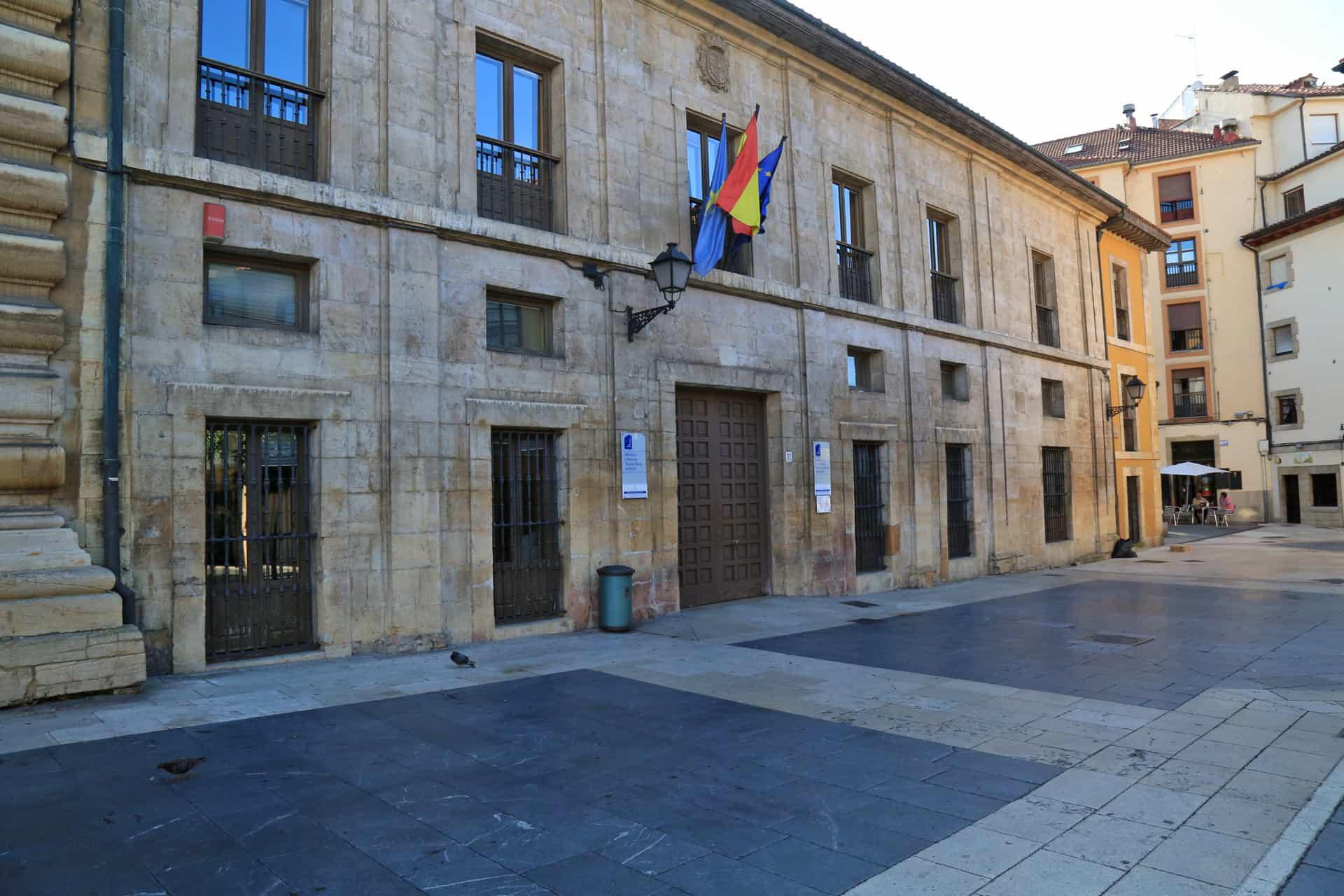
Ramón Pérez de Ayala Public Library.
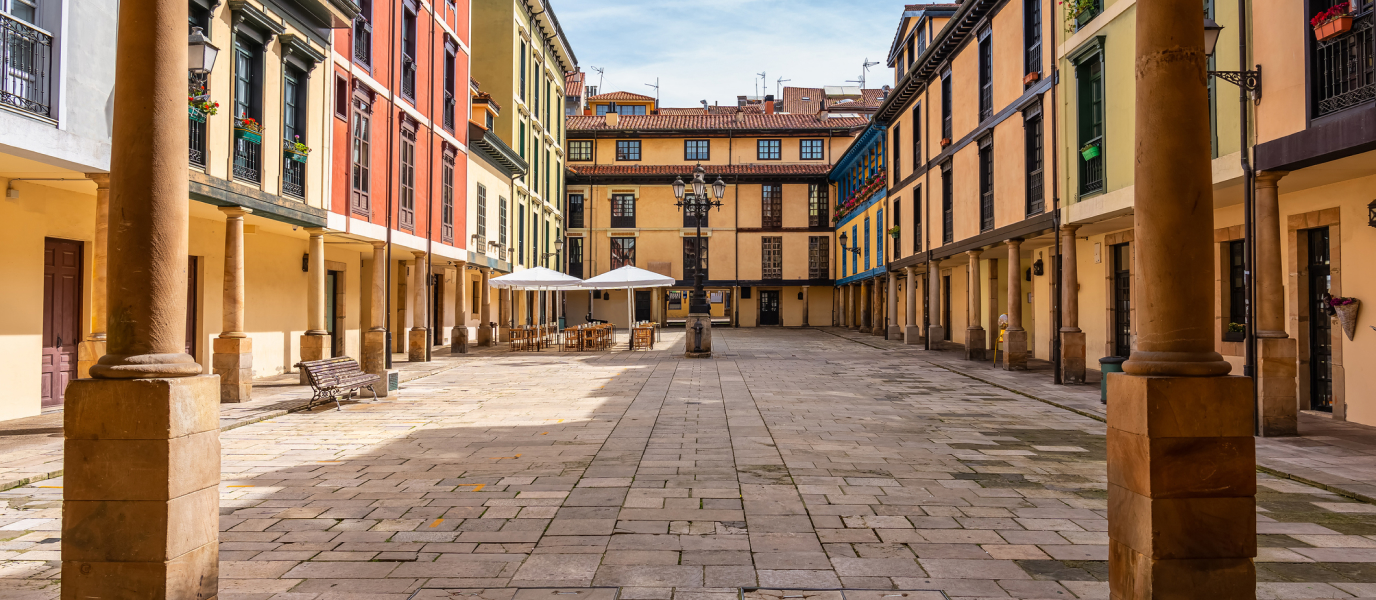
In the 20th century, theatrical activity in Plaza del Fontán was transferred to new venues.
Fontán Playhouse
It began as an open courtyard with wooden benches and a simple stage, marking the start of a theatrical tradition that would shape the city’s cultural life for more than two centuries.
At the end of the 18th century, it was transformed into an Italian-style indoor theatre, with a semicircular layout and boxes.
In the 19th century, it was Oviedo’s main theatre until its demolition in 1901, when activity was moved to other venues.
In September 1932, Federico García Lorca performed in Plaza del Fontán with his company “La Barraca”, marking a major cultural event in the city.
Read more →Interesting →
The theatre renovation in 1849 and the tax on wine sold in the city.
More details→
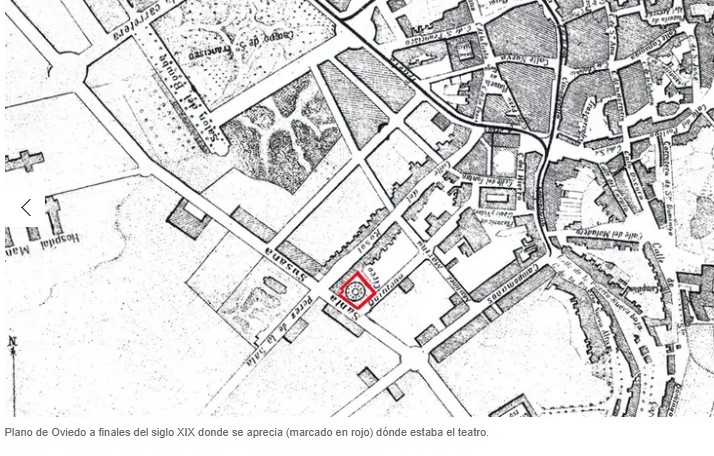
Corner of Quintana and Santa Susana streets, where the Oviedo Chamber of Commerce is currently located.
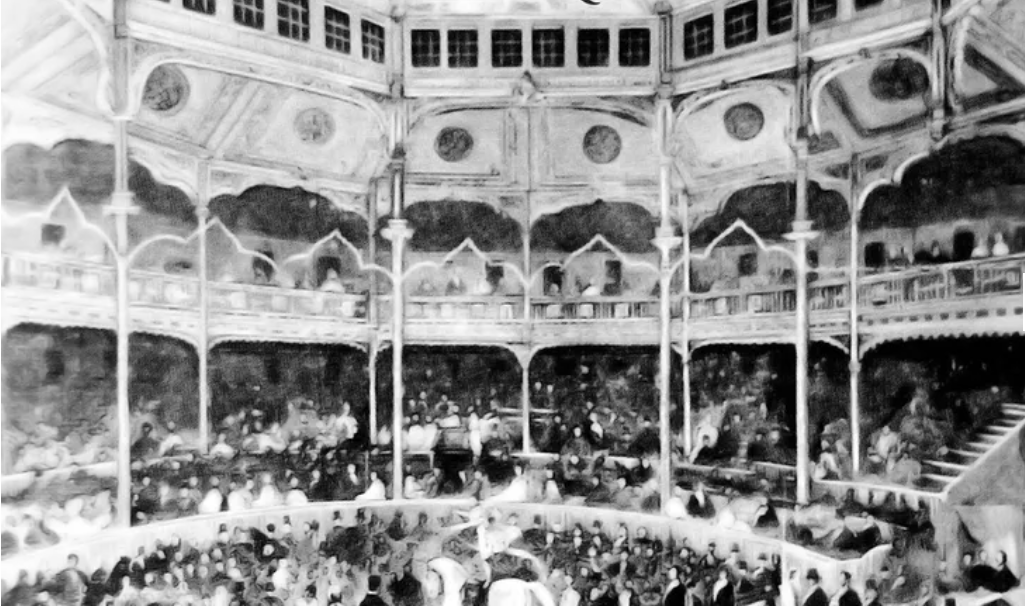
Reconstruction of the interior of the Santa Susana theatre-circus.
Santa Susana Theatre-Circus
Designed by the architect Juan Miguel de la Guardia, it was conceived as a versatile venue capable of hosting theatre, circus, and even bullfighting events.
The intention was for it to accommodate both artistic performances and circus troupes, and even 'capeas' or amateur bullfights (the bullring, also a designed by La Guardia, was not built until 1889).
Its exterior formed a decagonal polygon, while the interior featured a circular arena, characteristic of 19th-century theatre-circuses.
On the night of 11th July 1893, a fire razed the building to the ground, bringing a close one of the city’s most singular theatrical chapters.
Read more →More historical details →
It had a seating capacity of 1,692, exceeding that of the present-day Campoamor Theatre by over 200 seats.

Photo 1896: Octavio Bellmunt. Museum of the Asturian People.

Image of the theatre today.
Campoamor Theatre
Following the loss of the Fontán Playhouse, Oviedo required a new premier performance venue. The Campoamor Theatre, opened in 1892, succeeded it as the city’s foremost cultural centre.
Since its inception, it has served as Oviedo’s primary stage, hosting opera, theatre and concerts. Rebuilt after sustaining damage during the Civil War, it has since, consolidated its standing as one of the most prestigious cultural venues in northern Spain.
Each year it plays host to the Princess of Asturias Awards, among the most significant cultural events in the nation.
View awards →Read more →
It was named after the eminent Asturian Ramón de Campoamor, at the suggestion of the writer and then councillor Leopoldo Alas Clarín.
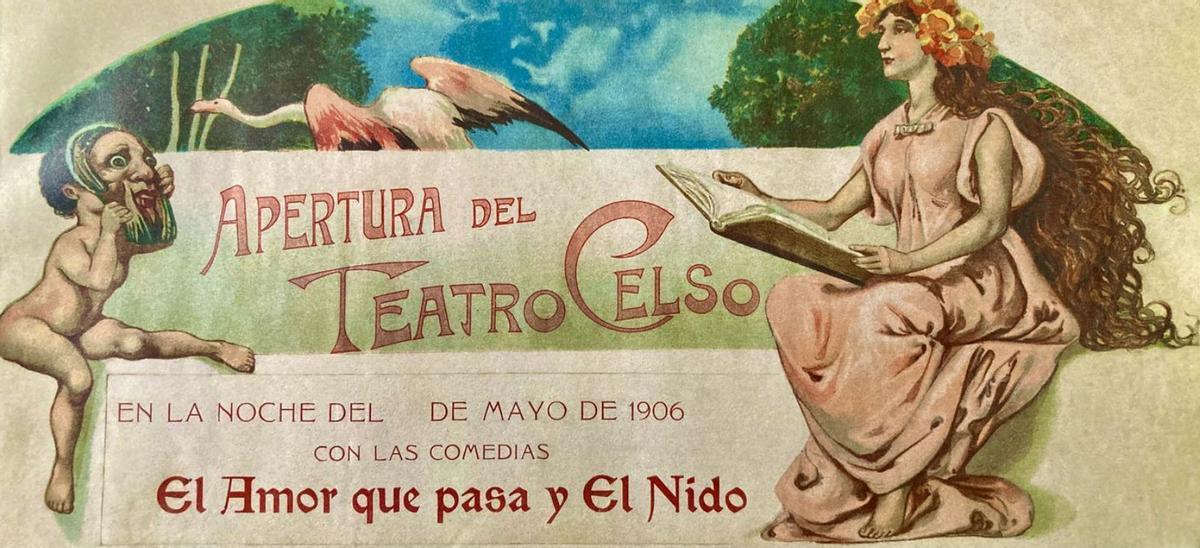
Celso Granda edited a leaflet in which several artists and poets dedicated charming verses to the new theatre.
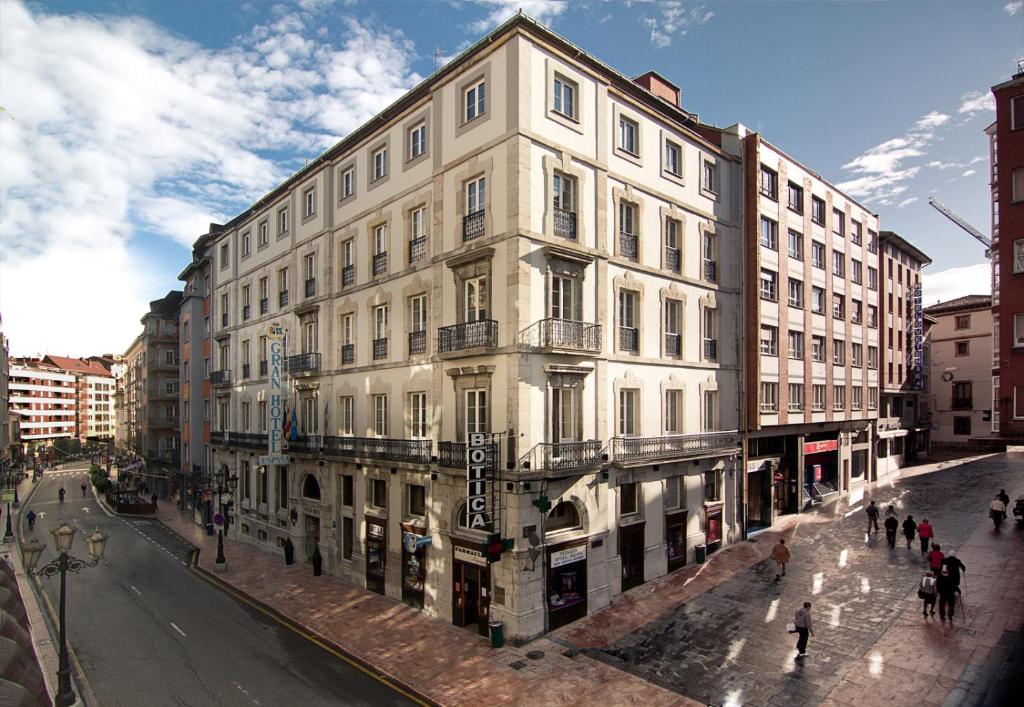
The theatre was located on the site where the Hotel España now stands.
Theatre Celso / Jovellanos
Inaugurated in 1906 on Jovellanos Street at the behest of Celso Granda, this was one of the city’s most favoured performance venues during the first third of the 20th century.
It programme featured theatre, zarzuela, variety acts, early cinematograph screenings, and musical recitals.
The Asturian Revolution of 1934 and the subsequent Spanish Civil War led to its destruction in 1936.
To mark its opening, the Balmana Company staged "The Love That Passes" by Álvarez Quintero.
The venue played host to celebrated variety artists of the era including Raquel Meller, Pastora Imperio, Tórtola Valencia, Amalia Molina, Lola Montes, Carmen Flores, and Dora la Cordobesita.
Read more →More historical details →
Only days after its opening, the theatre hosted one of the inaugural concerts of the Sociedad Filarmónica de Oviedo.
Grand Salón Bazar Masaveu (Oviedo), facade on Cimadevilla Street.
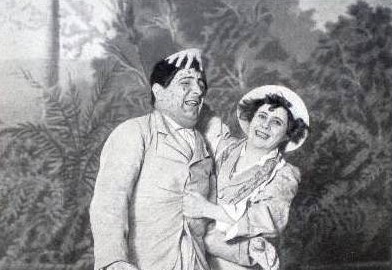
Loreto Prado and Enrique Chicote, a comic-lyrical duo at that time.
Ovies Theatre
This jewel of Art Nouveau architecture, commissioned in 1916 from Julio Galán Carbajal, comprised approximately 400 seats across the stalls, boxes, dress circles and galleries, following the popular theatrical models of the late 19th century.
Despite its vibrant programme, the theatre’s life was brief,closing its doors only a few years later. The premises were subsequently acquired by the Masaveu family, who repurposed the building into a renowned commercial bazaar.
The theatre opened with the company of Loreto Prado and Enrique Chicote, one of Spain's most eminent comic-lyrical ensembles of the day. Such was their success in Oviedo that they extended their residency in response to the public's enthusiastic acclaim.
Read article →At its opening, ticket prices — one peseta for a stall seat — were deemed extortionate for the period, particularly when measured against the cost of essential goods.

Image of the former water reservoirs of Pérez de la Sala.

The outstanding acoustic quality is the work of the Catalan physicist Higini Arau.
Auditorium Príncipe Felipe
Inaugurated in 1999 in Plaza del Fresno, the venue was constructed atop a former water reservoir, cleverly incorporating original elements into its contemporary design.
Conceived as a premier cultural and conference complex, it features several halls for concerts and events, with the Symphony Hall renowned for its impressive capacity and acoustic excellence.
It offers a vibrant musical programme, encompassing three artistic strands curated by the Municipal Foundation for Culture.
The auditorium is also the official home of the Asturias Symphony Orchestra, providing the setting for its prestigious annual concert season.
One of the most artistically significant features of the venue is the mural gracing the main foyer,titled “Silence and Music”, by Joaquín Vaquero Turcios.
More details →A living performing arts network
At present, performing arts in Oviedo extend far beyond the principal theatres, reaching into the heart of the city through an array of municipal cultural facilities.
Theatre is brought directly to local neighbourhoods via community centres and venues such as the Pumarín José Antonio Lobato Theatre. Here, a grassroots cultural programme flourishes, alongside initiatives dedicated to artistic training and creative development.
Similarly, the Trubia Casino Theatre, intimately linked to the area’s industrial heritage, forms a vital part of this cultural network, seamlessly bridging the past, the present, and the local community.
"A town that does not support and promote its theatre is either already dead or dying"
(F. García
Lorca)